Source barbell storage rack for gyms, home fitness, and commercial use
Explore 30 listings for barbell storage rack options from verified suppliers. Compare specifications like steel construction, capacity, and packaging to find the right solution for your facility needs.
Key considerations
Products List




Comprehensive Sourcing Guide
Strategic Sourcing Guide for Barbell Storage Racks
The global fitness equipment market continues to expand, driven by both commercial gym infrastructure projects and the growing trend of home fitness setups. Within this sector, the barbell storage rack serves as a critical piece of hardware, designed to organize, protect, and provide immediate access to weightlifting bars. For procurement professionals, sourcing these units requires a nuanced understanding of material integrity, dimensional specifications, and supply chain reliability. This guide outlines the essential factors for evaluating barbell storage racks, drawing on observed market data to inform decision-making without relying on unverified claims.
Technical Specifications and Material Composition
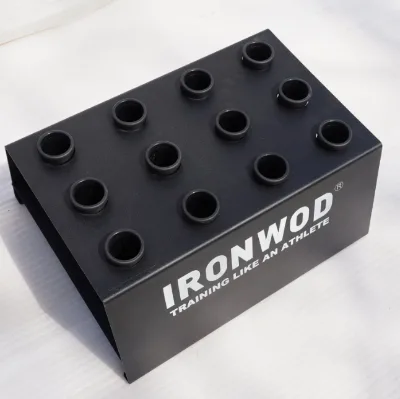
The foundational aspect of any barbell storage rack is its construction. Market observations indicate a predominant reliance on steel as the primary structural material, often combined with protective coverings to prevent damage to the equipment stored within. A common configuration involves a steel frame paired with a polypropylene (PP) cover. This combination offers a balance between structural load-bearing capacity and surface protection. The steel component ensures the rack can withstand the significant weight of loaded barbells, while the PP cover acts as a buffer, reducing noise and preventing scratches on the barbell sleeves.
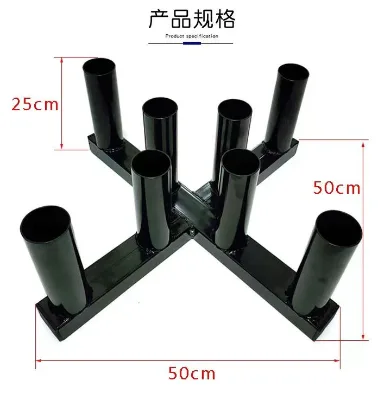
Dimensional consistency is equally vital. Procurement data highlights specific model numbers such as IW025047 and AP-99867, which correspond to distinct physical profiles. The single package size for certain units is recorded at 45x45x20 cm, while other configurations may vary. Buyers must verify the exact dimensions against their intended storage space, as the footprint of the rack directly impacts gym floor layout efficiency. Furthermore, the capacity of the rack is a key technical differentiator. Observed listings specify holder bar quantities ranging from standard configurations to options accommodating 12 pieces. This capacity must align with the inventory size of the facility; a rack designed for 12 barbells is unsuitable for a high-volume commercial gym with larger stock, whereas it may be ideal for a boutique studio or home setup.
Weight is another critical specification. A typical unit in the observed market data weighs approximately 23 kg, though this can vary based on the steel gauge and design complexity. The single gross weight of 5.000 kg noted in some listings likely refers to a specific component or a different packaging configuration, necessitating careful review of the packing list. For applications involving home or gymnasium use, the weight of the unit itself contributes to its stability; a heavier base generally reduces the risk of tipping during dynamic loading or unloading of heavy bars.
Compliance, Certification, and Safety Standards
When sourcing industrial fitness equipment, verifying compliance with safety standards is non-negotiable. While specific certification documents for every listed product cannot be confirmed without direct supplier verification, the market context suggests adherence to common sizing and structural norms. Some background information references the EN 957 standard, which pertains to fitness equipment safety. However, buyers should treat this as a reference point for due diligence rather than a guaranteed attribute of every listing. It is imperative to request current test reports or certification documents from the supplier to confirm that the specific model meets the safety requirements of the destination market.
The absence of explicit certification claims in general product descriptions does not imply non-compliance, but it does place the burden of verification on the buyer. Procurement teams should inquire about the testing protocols used for the steel frame and the PP cover. Questions should focus on load-bearing limits, stability tests under dynamic conditions, and the durability of the coating or covering material. For commercial applications, compliance with local building codes and occupational safety regulations is mandatory. Buyers must ensure that the supplier can provide documentation proving that the product has undergone rigorous stress testing to prevent structural failure during use.
Cost Drivers and Pricing Dynamics
The pricing of barbell storage racks is influenced by several variables, including material costs, manufacturing complexity, and order volume. The observed price range in the market spans from 3.65 to 325 USD, a wide disparity that reflects differences in quality, capacity, and customization levels. The lower end of the spectrum likely corresponds to basic, smaller capacity units or those with minimal packaging, while the higher end may include heavy-duty commercial models with advanced features or custom branding.
Minimum Order Quantity (MOQ) is a significant factor in the total cost of ownership. Market data shows MOQs ranging from 1 to 100 pieces, with specific listings indicating thresholds of 50 or 100 units. For buyers with smaller requirements, sourcing from suppliers with lower MOQs is essential, though this may come with a higher unit price. Conversely, larger orders can leverage economies of scale to reduce the per-unit cost. The packaging method also impacts cost; options such as "OPP Bag + Carton + Wooden Case" or "Packed in Wooden Case" suggest varying levels of protection and shipping complexity. Wooden cases, while offering superior protection for international shipping, add to the overall weight and cost, which must be factored into the logistics budget.
Typical Applications and User Demographics
Barbell storage racks are designed for versatility, catering to a broad spectrum of applications. The primary use cases include commercial gymnasiums, home gyms, and training facilities. The "Universal" and "Unisex" designations observed in product attributes indicate that these racks are intended for use by a diverse range of users, regardless of gender or age group, though specific models may be targeted at adults. The "Foldable" attribute is noted as "No" for certain models, suggesting that stability is prioritized over space-saving portability in these designs. This is typical for permanent installations in commercial settings where the rack remains in a fixed location.
The application environment dictates the required durability. In a high-traffic commercial gymnasium, the rack must withstand frequent loading and unloading, potentially involving heavy weights and rapid movement. In a home setting, the focus may shift slightly towards aesthetics and compactness, although the structural integrity remains paramount. The "Exercise Part" designation of "Arm" in some listings seems to be a categorization error or a specific reference to the barbell's function, as the rack itself supports the entire bar. Buyers should focus on the "Application" field, which explicitly lists "Fitness," "Home," and "Gymnasium," to ensure the product matches their operational needs.
Supplier Evaluation and Customization Options
Selecting the right supplier involves more than just comparing prices; it requires assessing their capability for customization and reliability. The market data reveals that many suppliers offer "Customized Logo" or "OEM Logo" services, allowing buyers to brand the equipment with their own corporate identity. This is particularly valuable for gym chains or fitness brands looking to maintain a consistent visual identity across their facilities. The "Brand Name" field shows entries like "IRONWOD" as well as "customized logo," indicating a mix of established brands and private label opportunities.
When evaluating suppliers, buyers should verify the "Place of Origin." Most observed listings indicate "Shandong, China" or simply "China," a region known for its manufacturing capabilities in fitness equipment. However, the specific location within the region can impact lead times and logistics. Suppliers should be transparent about their production capacity and ability to meet deadlines. The "Sample" availability is a crucial indicator of supplier confidence; the ability to provide samples allows buyers to physically inspect the build quality, finish, and functionality before committing to a large order. Additionally, the "Type" of product, listed as "Storage rack" or "Other," should be clearly defined to avoid confusion with other fitness apparatus.
Quality Control and Long-Term Procurement Considerations
Ensuring long-term value requires a robust quality control (QC) strategy. Buyers must establish clear acceptance criteria before production begins. This includes verifying the thickness of the steel, the quality of the welds, and the adhesion of the PP cover. The "Standard" field in the data mentions "Common Size" and specific piece options (3/6/8/9/10/12 pieces), which suggests that standardization is a key feature. However, buyers should confirm that the specific model they order adheres to these standards and that the dimensions match the provided specifications, such as 48x48x20 cm or 30x12 cm.
Packaging is a critical component of quality control, as it protects the product during transit. The observed packaging options range from simple cartons to comprehensive wooden cases. For international shipments, the wooden case is often preferred to prevent damage from handling and environmental factors. Buyers should ensure that the packaging includes clear labeling and instructions for assembly, as improper assembly can compromise the safety and stability of the rack.
Long-term procurement considerations also involve the availability of spare parts and after-sales support. While not explicitly detailed in the current data, a reliable supplier should offer support for any defects or wear and tear. The "Power Source" being listed as "Manual" confirms that these are passive storage units, reducing the risk of mechanical failure associated with powered equipment. However, the mechanical stress on the steel and the wear on the PP covers over time should be considered. Buyers should inquire about the warranty terms and the supplier's policy on replacing damaged components.
Comparative Analysis of Key Product Attributes
To facilitate a clearer comparison of the available options, the following table summarizes the key attributes observed in the market data. This comparison helps buyers identify which models align best with their specific requirements regarding capacity, material, and customization.
| Attribute | Option A (Model IW025047) | Option B (Model AP-99867) | Option C (Model BP-DR082) | Option D (Model SS-001-12) |
|---|---|---|---|---|
| Primary Material | Steel + PP Cover | Steel | Steel | Steel |
| Holder Capacity | 12 pcs | Not specified | 3/6/8/9/10/12 pcs | Not specified |
| Brand Name | IRONWOD | Customized Logo | Not specified | Not specified |
| Logo Customization | Printed | Customer Logo / OEM | Not specified | Not specified |
| Packaging | Carton | Not specified | OPP Bag + Carton + Wooden Case | Packed in Wooden Case |
| Foldable | No | Not specified | Not specified | Unfolded |
| Place of Origin | Shandong, China | China | Not specified | Not specified |
| MOQ | 50 pcs | 100 pcs | Not specified | Not specified |
| Weight | 23 kg | Not specified | Not specified | Not specified |
This table illustrates the diversity in the market. Option A offers a specific brand and capacity, while Option C provides the most flexible packaging and capacity options. Option D emphasizes heavy-duty wooden case packaging, suitable for long-distance shipping. Buyers must weigh these attributes against their specific operational needs and budget constraints.
Conclusion
Sourcing barbell storage racks requires a methodical approach that balances technical specifications, cost considerations, and supplier reliability. By focusing on material quality, verifying compliance with safety standards, and understanding the nuances of customization and packaging, procurement professionals can secure equipment that meets the demands of their facilities. The wide range of options available, from basic home units to heavy-duty commercial racks, ensures that there is a solution for every application. However, the responsibility lies with the buyer to conduct thorough due diligence, request samples, and verify all claims to ensure a successful procurement outcome.
FAQs
What is the typical holder capacity for these racks?
The observed capacity is 12 pieces for specific models like IW025047. Other configurations offer options for 3, 6, 8, 9, 10, or 12 pieces depending on the standard size selected by the buyer.
Which material composition is standard for these units?
Most units are constructed from steel combined with a polypropylene cover. Some listings specify steel alone, while others explicitly mention the steel plus PP cover combination for durability and protection.
Can I request a customized logo on the product?
Yes, customization is available with options for printed, customer, or OEM logos. Buyers can specify their branding requirements, though the brand name may vary between established names like IRONWOD and custom options.
What is the minimum order quantity for bulk purchases?
The minimum order quantity ranges from 1 to 100 pieces across different listings. Specific models may require 50 or 100 units, so buyers must verify the threshold for their selected model number.
Where are these storage racks typically manufactured?
The place of origin is primarily Shandong, China, with some listings simply stating China. This region is a known hub for fitness equipment manufacturing, influencing logistics and lead times for international buyers.
How are these racks packaged for international shipping?
Packaging options include OPP bags with cartons, wooden cases, or standard cartons. The specific method depends on the model, with some requiring wooden cases for superior protection during transit.